
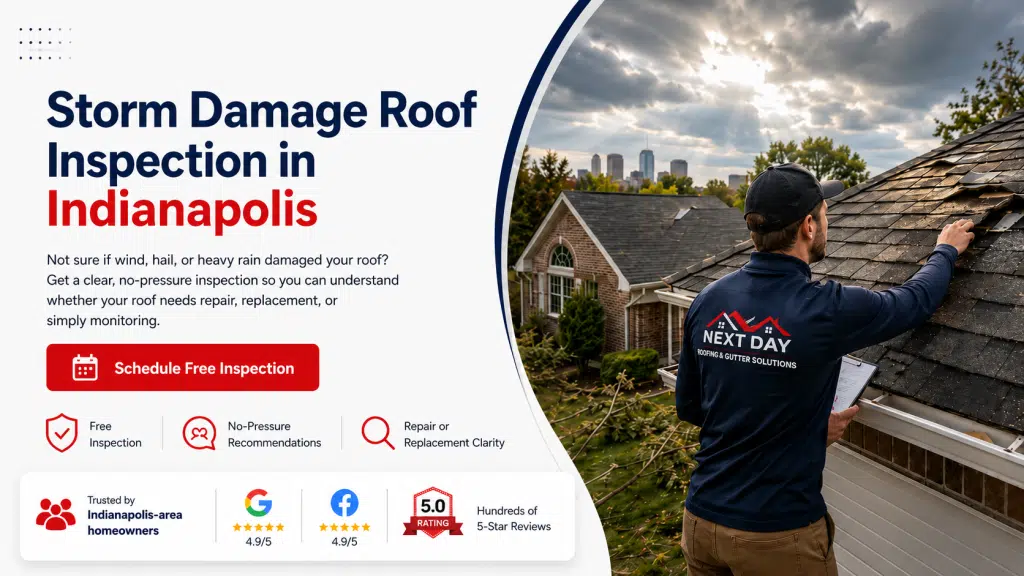
Storm Damage Does Not Always Mean You Need a New Roof
Many Indianapolis homeowners hesitate to call a roofing company after a storm because they do not want to be pressured into a full roof replacement.
That concern is understandable.
The truth is, storm damage can range from minor to serious. Some roofs only need a small repair. Some need damaged shingles replaced. Some have issues around flashing, vents, gutters, or roof penetrations. Other roofs may have enough wind or hail damage that replacement should be discussed.
Our goal is to help you understand the condition of your roof before you make a costly decision.
We look for signs of:
- Wind-lifted shingles
- Missing shingles
- Hail impact marks
- Granule loss
- Bruised or damaged shingles
- Exposed nail heads
- Damaged flashing
- Dented vents or metal components
- Soft spots or weakened areas
- New or worsening leaks
- Gutter and drainage problems caused by storm debris
Then we explain what the findings mean in plain language.
Common Signs of Storm Damage on Indianapolis Roofs
You may not need to climb onto your roof to know something changed after a storm. Many warning signs can be seen from the ground, inside the home, or around the property.
Signs You May Notice Outside
After wind, hail, or heavy rain, look for:
- Shingles in the yard
- Shingles that look lifted, curled, or uneven
- Dark patches where granules may have worn away
- Dents on gutters, downspouts, vents, or flashing
- Tree limbs or debris on the roof
- Gutters overflowing or pulling away
- Loose fascia or soffit areas
- Water collecting near the foundation
- New stains on siding near the roofline
Signs You May Notice Inside
Storm damage does not always show up as an immediate leak. Sometimes the first sign appears days or weeks later.
Inside your home, watch for:
- Ceiling stains
- Water spots near walls or corners
- Damp insulation in the attic
- Musty smells after rain
- Peeling paint near the ceiling
- Dripping during heavy rain
- Light showing through roof decking in the attic
A small water stain does not automatically mean you need a new roof. But it does mean the roof should be checked before the problem spreads.
Wind Damage vs. Hail Damage: What Is the Difference?
Storm damage is not always the same. Wind and hail affect roofs in different ways.
Wind Damage
Wind can lift shingles, loosen seals, expose nail heads, or tear shingles away completely. Even if the shingle settles back down after the storm, the seal may be weakened. That can make the roof more vulnerable during the next round of heavy wind or rain.
Common signs of wind damage include:
- Missing shingles
- Lifted shingles
- Creased shingles
- Exposed underlayment
- Loose ridge caps
- Shingles that flap or shift
- Leaks near vulnerable roof edges
Wind damage can be easy to underestimate because the roof may look mostly normal from the ground.
Hail Damage
Hail damage is often harder for homeowners to see. Hail can bruise shingles, knock away protective granules, dent metal components, or weaken the shingle surface.
Common signs of hail damage include:
- Random impact marks
- Granules collecting in gutters
- Dents on vents, flashing, or gutters
- Soft spots on shingles
- Dark circular marks
- Accelerated shingle wear after the storm
Hail damage may not cause an immediate leak, but it can shorten the life of the roof if left unaddressed.
Should You Call a Roofer or Insurance First?
If you suspect storm damage, many homeowners wonder whether they should call their insurance company first or schedule a roof inspection first.
In many cases, it helps to have the roof inspected before making a claim so you can better understand what happened and whether the damage appears significant enough to document.
A roof inspection can help answer:
- Is there visible storm damage?
- Does the roof appear repairable?
- Is the issue more likely age-related wear?
- Are there signs of wind or hail impact?
- Is water entering the home?
- Should photos and documentation be gathered?
- Is the damage isolated or widespread?
Next Day Roofing & Gutter Solutions does not make insurance coverage decisions. Your insurance company and policy determine what is covered. What we can do is inspect the roof, explain the visible condition, and provide clear documentation if storm-related damage is found.
Repair, Replacement, or Monitoring: What Happens After the Inspection?
After a storm damage roof inspection, the next step depends on what we find.
If the Damage Is Minor
You may only need a small repair, such as replacing a few shingles, sealing a vulnerable area, repairing flashing, or addressing a leak source.
If the Damage Is Moderate
Some roofs have storm damage that should be addressed soon but may not require immediate replacement. In this case, we will explain the repair options and what could happen if the issue is ignored.
If the Damage Is Widespread
If the roof has extensive wind, hail, or water-related damage, we will explain why replacement may be worth considering. We will show you what we found and help you understand the difference between normal aging and storm-related damage.
If the Roof Looks Okay
Sometimes the inspection shows no major concern. If your roof appears to be in good condition, we will tell you that. A no-pressure inspection should give you peace of mind, not a sales pitch.
Indianapolis Storm Damage Roof Inspections Without the Pressure
A storm can already be stressful enough. You should not have to wonder whether the roofer inspecting your home is trying to sell you something you do not need.
Our inspection process is built around clarity.
We explain:
- What we looked at
- What we found
- Whether the issue appears urgent
- Whether repair may be enough
- Whether replacement should be discussed
- Whether documentation may be helpful
- What could happen if the issue is ignored
You get a straightforward explanation before making a decision.
Indianapolis Areas We Serve
Next Day Roofing & Gutter Solutions serves homeowners throughout the Indianapolis area, including:
- Indianapolis
- Carmel
- Fishers
- Noblesville
- Westfield
- Zionsville
- Avon
- Brownsburg
- Plainfield
- Greenwood
- Lawrence
- McCordsville
- Greenfield
- Beech Grove
- Speedway
- Franklin Township
- Geist-area neighborhoods
If your home was recently hit by wind, hail, or heavy rain, we can inspect the roof and help you understand what condition it is in.
Why Homeowners Call Next Day Roofing & Gutter Solutions After a Storm
Homeowners call us because they want answers before making an expensive decision.
They may not know whether the roof needs a repair, replacement, insurance documentation, or nothing at all. They may see a small leak and worry it points to a bigger issue. They may see missing shingles and wonder if the roof is still protecting the home.
That is where we can help.
With Next Day Roofing & Gutter Solutions, you get:
- A free roof inspection
- Clear explanations
- No-pressure recommendations
- Repair and replacement options when appropriate
- Help identifying storm-related concerns
- Photos and documentation when damage is found
- Roofing and gutter solutions for the full exterior system
We are here to help you make a confident decision, not rush you into the most expensive option.
Schedule a Free Storm Damage Roof Inspection in Indianapolis
If your home was recently hit by wind, hail, or heavy rain, do not wait until a small issue becomes a major leak.
A roof inspection can help you understand whether your roof is still protecting your home or whether repairs should be made before the next storm.
Schedule your free storm damage roof inspection with Next Day Roofing & Gutter Solutions today.
Frequently Asked Questions About Storm Damage Roof Inspections in Indianapolis
How do I know if my roof has storm damage?
You may notice missing shingles, lifted shingles, ceiling stains, granules in the gutters, dents on metal vents or gutters, or new leaks after heavy rain. However, some storm damage is difficult to see from the ground. A roof inspection can help determine whether the roof has visible wind, hail, or water-related damage.
Does storm damage always mean I need a new roof?
No. Storm damage does not always mean full roof replacement. Some storm-related issues can be repaired. The right solution depends on the age of the roof, the type of damage, how widespread the damage is, and whether the roof is still protecting the home properly.
Can wind damage shingles even if none are missing?
Yes. Wind can lift shingles, weaken seals, crease shingles, or loosen roof components without fully removing the shingles. That kind of damage may not be obvious from the ground, but it can make the roof more vulnerable to leaks later.
What does hail damage look like on a roof?
Hail damage can appear as bruised shingles, missing granules, soft impact spots, dark marks, or dents on metal roof components. It is often easier to spot on gutters, vents, flashing, and downspouts than on shingles from the ground.
Should I file an insurance claim for roof damage?
That depends on the condition of the roof, the type of damage, your deductible, and your insurance policy. A roof inspection can help you understand whether there is visible damage worth documenting before you decide whether to contact your insurance company.
Can a roof leak after a storm be repaired?
Many storm-related roof leaks can be repaired, especially if the issue is isolated. Common repair areas include missing shingles, flashing, pipe boots, vents, ridge caps, or small vulnerable sections of the roof. If the damage is widespread, replacement may be worth discussing.
How soon should I schedule a roof inspection after a storm?
It is best to schedule an inspection soon after you notice possible storm damage, especially if you see missing shingles, leaks, ceiling stains, or debris impact. Waiting too long can allow water to spread into the attic, insulation, decking, or interior walls.
What if I only see a small ceiling stain?
A small ceiling stain may point to a minor leak, but it should still be inspected. Roof leaks can travel before showing up inside the home, so the stain may not be directly below the source of the problem.
Can storm damage affect gutters too?
Yes. Heavy rain, hail, wind, and debris can damage gutters, loosen downspouts, clog drainage paths, or cause water to overflow near the foundation. Because the roof and gutter system work together, it is helpful to check both after a major storm.
Do you pressure homeowners into roof replacement?
No. Our goal is to explain what we find and help you understand your options. If a repair makes sense, we will say so. If replacement should be considered, we will explain why. If the roof looks okay, we will tell you that too.